
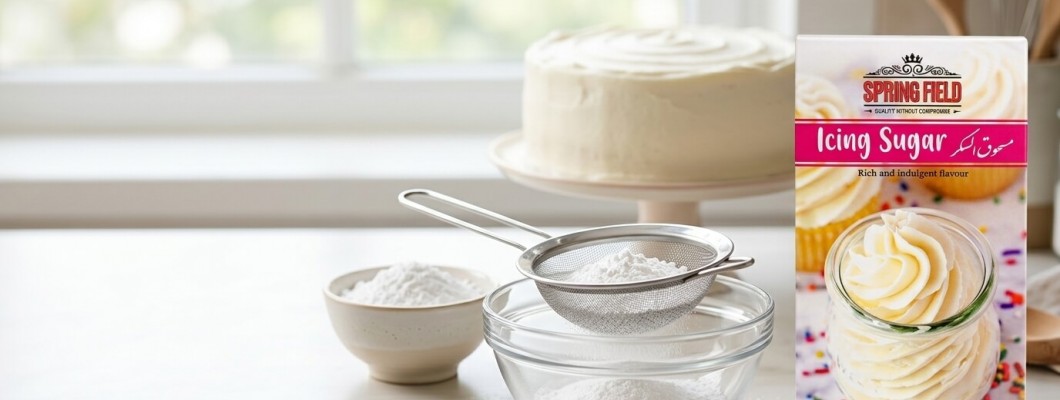
The Fine Sugar Difference: Icing Sugar for Cakes, Glazes & Frosting
Quick Answer: Icing sugar is a finely powdered form of sugar commonly used for frosting, icing, glazes, dessert finishing and selected baking recipes. Its fine texture dissolves easily, making it especially useful when you want a smooth icing or a light dusting over cakes, cookies and other desserts.
What is icing sugar?
Icing sugar is finely powdered sugar, also commonly called powdered sugar or confectioners' sugar. Its very fine texture makes it different from regular granulated sugar and allows it to blend easily into frostings, glazes and other smooth mixtures.
King Arthur Baking notes that confectioners' sugar is also known as powdered sugar or icing sugar and is particularly useful for icings, frostings and glazes because of its fine consistency.
What is icing sugar used for?
Icing sugar is most useful when you want sweetness together with a smooth texture or a fine finishing layer.
| Use | Why icing sugar works | Examples |
|---|---|---|
| Frosting | Blends into butter and other ingredients smoothly | Cakes and cupcakes |
| Glaze | Creates a pourable sweet coating | Loaf cakes, donuts, cinnamon rolls |
| Cookie icing | Helps create a smooth icing mixture | Decorated cookies |
| Dusting | Adds a fine sweet finish | Cakes, brownies and pastries |
| Selected baking recipes | Provides a fine sugar texture | Shortbread and other delicate bakes |
Why is icing sugar better for frosting?
Icing sugar is well suited to frosting because its fine particles can blend into the mixture without leaving the same coarse crystal texture associated with regular granulated sugar.
For example, a simple confectioners' sugar icing can be adjusted by adding more icing sugar for a thicker consistency or more liquid for a thinner glaze. King Arthur Baking uses this approach in its basic icing recipe.
How do you make a simple icing with icing sugar?
A simple icing can be made by combining icing sugar with a small amount of liquid and adjusting the consistency until it is suitable for spreading or drizzling.
- Place the required icing sugar in a clean bowl.
- Sift it first if you notice lumps.
- Add a small amount of milk, water or another recipe-specified liquid.
- Whisk until smooth.
- Adjust the consistency with more icing sugar or liquid.
- Spread, drizzle or pipe the icing onto the cooled baked item.
The amount of liquid controls the final consistency. A thicker mixture works for spreading or defined decoration, while a thinner mixture works better as a glaze.
How do you make icing sugar smooth and lump-free?
The simplest way to reduce lumps is to sift the icing sugar before mixing it into the icing or frosting.
- Sift the sugar before adding liquid.
- Add liquid gradually instead of all at once.
- Whisk thoroughly after each addition.
- Avoid adding too much liquid too quickly.
- Use the finished icing soon after preparing it if the recipe calls for immediate application.
If a glaze becomes too thin, adding more icing sugar can bring the consistency back toward a thicker texture. King Arthur Baking recommends adjusting confectioners' sugar icing this way.
Can icing sugar be used for cake frosting?
Yes. Icing sugar is one of the most practical choices for many cake and cupcake frostings.
It can be combined with ingredients such as butter, milk, cream, flavourings or other recipe-specific ingredients to create a spreadable frosting. The final consistency depends on the recipe and the ratio of sugar to liquid or fat.
Can you use icing sugar for cake glaze?
Yes. Icing sugar is particularly useful for simple cake glazes because it can dissolve into a small amount of liquid and create a smooth coating.
A glaze can be drizzled over loaf cakes, Bundt cakes, muffins, cinnamon rolls and similar baked goods. King Arthur Baking uses confectioners' sugar in a basic drizzle-style icing for these types of desserts.
Can icing sugar be used on cookies?
Yes. Icing sugar can be used in cookie icing and in some cookie doughs where a fine sugar texture is desired.
For decorated cookies, icing sugar can form the base of smooth icing mixtures used for spreading or piping. Royal icing, for example, is traditionally prepared with confectioners' sugar.
Can you dust icing sugar over desserts?
Yes. A light dusting of icing sugar can give cakes, brownies, pastries and other desserts a simple finishing appearance.
For dusting, use a small sieve or fine shaker and apply a thin layer immediately before serving or photographing the dessert.
What is the difference between icing sugar and granulated sugar?
| Feature | Icing Sugar | Granulated Sugar |
|---|---|---|
| Texture | Very fine powder | Distinct crystals |
| Best known for | Frostings, glazes and finishing | General baking and cooking |
| Dissolves quickly | Yes, because of its fine texture | More slowly |
| Dusting desserts | Very suitable | Not usually preferred |
| Frosting | Common choice | Usually requires a different preparation method |
These sugars should not automatically be substituted by volume because their textures and densities differ. Follow the specific recipe when replacing one type of sugar with another.
Is icing sugar the same as powdered sugar?
In many baking contexts, yes. Icing sugar, powdered sugar and confectioners' sugar are commonly used as names for the same finely powdered sugar product. Product formulations can vary, so check the package label when the exact ingredients matter.
King Arthur Baking specifically identifies confectioners' sugar as another name for powdered sugar or icing sugar.
What happens if icing sugar is too thick?
If an icing or glaze is too thick to spread or drizzle, add a very small amount of liquid and mix again.
Add liquid gradually rather than pouring in a large quantity. This gives you better control over the final consistency.
What happens if icing sugar icing is too thin?
If the mixture is too thin, gradually add more icing sugar and whisk until the desired consistency returns.
This gradual adjustment is especially useful when making cake glazes because a small change in liquid can noticeably change how quickly the icing flows.
Should you sift icing sugar before using it?
Sifting is useful when the icing sugar contains visible lumps or when you need an especially smooth frosting or decorative icing.
For a simple dusting, sifting also helps distribute the sugar more evenly across the surface of the dessert.
Can icing sugar be used in baking?
Yes, but it should not automatically replace granulated sugar in every recipe. Its fine texture changes how sugar behaves in a mixture.
King Arthur Baking notes that confectioners' sugar can be useful in certain delicate baked goods, including shortbread, where its fine texture contributes to a tender result.
Who should use icing sugar?
Icing sugar is useful for home bakers, families, bakeries, cafés, restaurants and dessert businesses that prepare cakes, cupcakes, cookies, pastries and other sweet products.
- Home bakers: for simple cake frosting and dessert finishing.
- Families: for cupcakes, cookies and homemade desserts.
- Bakeries: for frosting, glaze and decorative applications.
- Cafés: for finishing cakes, muffins and pastries.
- Professional kitchens: for consistent dessert preparation and finishing.
What is an easy icing sugar dessert idea?
For a quick dessert finish, prepare a simple icing by gradually mixing icing sugar with a small amount of liquid until smooth. Drizzle it over a cooled loaf cake, muffins or cinnamon rolls.
For a thicker finish, use less liquid. For a more fluid glaze, add liquid gradually until the mixture reaches the consistency you want.
What are common icing sugar mistakes?
- Adding too much liquid at the beginning.
- Skipping sifting when the sugar is visibly lumpy.
- Applying icing to a very hot cake before the recipe calls for it.
- Using icing sugar as a direct substitute for granulated sugar without checking the recipe.
- Adding too much icing sugar and making the frosting unnecessarily thick.
- Leaving prepared icing uncovered for too long, allowing its surface to dry.
How should icing sugar be stored?
Keep dry icing sugar in a tightly closed container in a cool, dry place and follow the storage directions on the package.
USDA guidance for dry goods recommends following the manufacturer's label and storing dry products appropriately to help maintain freshness and quality.
Frequently Asked Questions About Icing Sugar
What is icing sugar mainly used for?
Icing sugar is mainly used for frosting, icing, glazes, dessert dusting and selected baking recipes where a fine sugar texture is useful.
Is icing sugar the same as powdered sugar?
In common baking terminology, icing sugar and powdered sugar are names used for finely powdered sugar. Check the product label when the exact formulation matters.
Can icing sugar be used for frosting?
Yes. Its fine texture makes it particularly suitable for smooth cake and cupcake frosting.
How do I stop icing sugar from becoming lumpy?
Sift the icing sugar before mixing, add liquid gradually and whisk thoroughly until the mixture becomes smooth.
Can icing sugar be used for glaze?
Yes. Icing sugar can be mixed with a small amount of liquid to create a smooth glaze for cakes, muffins, pastries and similar desserts.
Can I use icing sugar instead of normal sugar?
Not as a universal one-to-one replacement. Icing sugar has a much finer texture and can behave differently from granulated sugar in recipes.
Why is my icing sugar glaze too runny?
The mixture may contain too much liquid. Add more icing sugar gradually and whisk until the glaze reaches the desired thickness.
Why is my icing sugar frosting too thick?
Add a very small amount of the recipe's liquid and mix again. Continue gradually until the frosting reaches a spreadable consistency.
Should icing sugar be sifted?
Sifting is recommended when the sugar contains lumps or when you want an especially smooth icing or frosting.
Related TY Foods Resources
- Baking Ingredients at TY Foods
- Cocoa Powder Uses for Cakes, Brownies & Desserts
- Baking Soda Uses, Tips & Common Mistakes
- Instant Yeast for Naan, Bread & Pizza
Key Takeaway
Icing sugar is the practical choice when a recipe needs a fine, smooth sugar texture. It works particularly well for cake frosting, glazes, cookie icing and dessert finishing, while also having specific uses in selected baked goods.
The key to better results is controlling the texture: sift when necessary, add liquid gradually and choose icing sugar for recipes that benefit from its fine consistency.
Springfield is a food brand by TY Foods Pakistan, offering baking and cooking ingredients for home kitchens, bakeries, cafés and food-service use.
Further reading: For more information about icing sugar and its baking applications, see the King Arthur Baking sugar guide and its quick icing reference.
Leave a Comment