
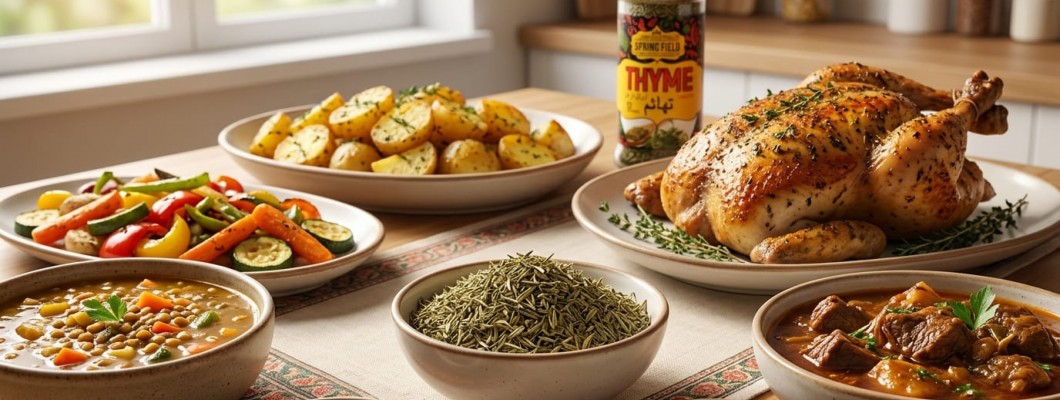
The Slow-Cooking Secret: Thyme Uses, Pairings & Kitchen Tips
Quick Answer: Thyme is an aromatic culinary herb that works well with chicken, meat, soups, gravies, roasted vegetables, sauces and slow-cooked dishes. Dried thyme is especially convenient for everyday cooking because it can be added directly to many recipes.
Thyme has a distinctive herbal aroma that can add depth to both simple and slow-cooked meals. It works particularly well when combined with savoury ingredients such as chicken, meat, vegetables, soups, sauces and gravies.
What Is Thyme Used For?
Thyme is a culinary herb made from the leaves of plants in the Thymus genus. It is used to add herbal aroma and flavour to a wide range of savoury foods.
How Do You Use Dried Thyme in Cooking?
Add dried thyme directly to savoury recipes and allow its aroma to blend with the other ingredients during cooking.
- Choose a recipe that suits thyme's herbal flavour.
- Add a small amount of dried thyme with the other seasonings.
- Mix it evenly through the dish.
- Allow the food to cook so the herb can blend with the other flavours.
- Taste the finished dish and adjust the seasoning if needed.
Dried herbs are concentrated compared with fresh herbs. University of Minnesota Extension notes that dried herbs can generally substitute for fresh herbs at about one-third of the amount stated for fresh herbs. University of Minnesota Extension guidance on dried herbs
What Foods Go Well With Thyme?
Thyme pairs especially well with savoury foods such as chicken, meat, soups, vegetables, gravies and slow-cooked dishes.
- Chicken
- Beef and other meat dishes
- Soups
- Gravies and sauces
- Roasted vegetables
- Potatoes
- Rice and savoury grain dishes
- Slow-cooked meals
- Salad dressings
How Do You Use Thyme With Chicken?
Thyme works well with chicken because its herbal aroma complements savoury seasoning and roasted or slow-cooked preparations.
Add dried thyme to chicken marinades, seasoning mixes, sauces or roasting preparations. It can be combined with ingredients such as garlic, black pepper, paprika, lemon or other herbs depending on the recipe.
For a simple roasted chicken seasoning, combine thyme with your preferred spices and seasonings, then distribute the mixture evenly over the chicken before cooking.
Can You Put Thyme in Soup?
Yes. Thyme can add herbal depth to soups, particularly hearty vegetable, chicken and meat-based soups.
Add dried thyme during cooking so its flavour can blend with the broth and other ingredients. Start with a modest amount and adjust after tasting.
Why Is Thyme Good for Slow-Cooked Dishes?
Thyme is a practical choice for slow-cooked dishes because its herbal flavour can blend gradually with sauces, broth, meat and vegetables during cooking.
It works well in stews, gravies, soups and other dishes that cook for longer periods. Add it with the other seasonings and allow the flavour to develop as the dish cooks.
For slow-cooked food, thyme does not need to be the dominant flavour. Its role is often to provide an aromatic herbal layer alongside the main ingredients.
Can Thyme Be Used With Vegetables?
Yes. Thyme pairs well with many savoury vegetables, especially roasted or pan-cooked vegetables.
Try it with potatoes, carrots, mushrooms, onions and other vegetables where a warm herbal flavour complements the dish.
Which Vegetables Pair Best With Thyme?
| Vegetable | Good Use |
|---|---|
| Potatoes | Roasting and pan-cooking |
| Carrots | Roasting and savoury side dishes |
| Mushrooms | Pan-cooked dishes, sauces and gravies |
| Onions | Soups, sauces and slow-cooked dishes |
| Mixed vegetables | Roasted vegetable dishes and savoury meals |
Can You Use Thyme With Meat?
Yes. Thyme is commonly used with meat and can complement savoury meat dishes, gravies and slow-cooked preparations.
Add it to seasoning mixes, marinades, sauces or stews. Thyme can also be combined with other herbs and spices to create a more complex savoury flavour.
Fresh Thyme vs Dried Thyme: Which Should You Use?
| Feature | Fresh Thyme | Dried Thyme |
|---|---|---|
| Form | Fresh herb leaves and stems | Dried herb |
| Convenience | Useful when fresh herbs are available | Easy to keep in the pantry |
| Flavour | Fresh herbal character | More concentrated dried-herb character |
| Best for | Fresh finishing and recipes calling for fresh herbs | Soups, sauces, marinades, roasting and everyday cooking |
If a recipe specifies fresh thyme but you only have dried thyme, adjust the quantity rather than using the same volume. University of Minnesota Extension gives a general substitution guideline of using about one-third as much dried herb as fresh. UMN Extension dried-herb guidance
How Much Dried Thyme Should You Use?
Start with a small amount and adjust according to the size of the recipe and the other seasonings.
| Use Case | Practical Approach |
|---|---|
| Soup | Start with a modest amount and taste during seasoning |
| Chicken | Combine with other herbs and spices in the seasoning |
| Roasted vegetables | Sprinkle lightly with the other seasonings before roasting |
| Stew | Add during cooking so the flavour blends into the dish |
| Marinade | Combine with other marinade ingredients for balanced flavour |
When Should You Add Thyme to a Recipe?
The best timing depends on the dish, but dried thyme can usually be added during cooking so its flavour blends with the other ingredients.
- Soups: Add during cooking and taste before serving.
- Stews: Add with the other seasonings during the cooking process.
- Roasted vegetables: Add before roasting.
- Chicken: Add to the seasoning or marinade before cooking.
- Sauces: Add while the sauce is developing its flavour.
What Does Thyme Taste Like?
Thyme has an aromatic herbal flavour that can add a warm, savoury character to food.
Its flavour is distinctive but versatile, which is why thyme can be paired with meat, poultry, vegetables, soups and sauces. Because dried herbs are concentrated, use them gradually when seasoning a recipe.
What Herbs Pair Well With Thyme?
Thyme can be combined with other culinary herbs when you want a more layered seasoning profile.
| Herb | Common Pairing Idea |
|---|---|
| Rosemary | Roasted potatoes, chicken and meat |
| Oregano | Tomato-based sauces and savoury dishes |
| Sage | Rich savoury dishes and meat preparations |
| Parsley | Soups, sauces and finishing |
| Basil | Selected sauces and vegetable dishes |
Who Is This Thyme Guide For?
This guide is useful for home cooks, beginner cooks, families, students, meal-prep users, restaurants and catering kitchens looking for a versatile dried herb for everyday savoury cooking.
It is especially helpful when preparing chicken, meat, soups, gravies, roasted vegetables, marinades and slow-cooked dishes.
What Are Common Thyme Mistakes?
- Using too much: Start with a small quantity because dried herbs can have concentrated flavour.
- Using fresh and dried thyme in equal amounts: Dried herbs generally require a smaller quantity than fresh herbs.
- Adding it without considering other herbs: Think about the complete seasoning profile of the dish.
- Not tasting the dish: Adjust seasoning after the thyme has blended with the other ingredients.
- Using thyme in every recipe: Its herbal character works best when it complements the main ingredients.
What Is a Simple Thyme Recipe Example?
Imagine you are making roasted potatoes. Toss the potatoes with oil, salt, black pepper and a small amount of dried thyme before roasting.
As the potatoes cook, the thyme blends with the savoury seasoning and adds an aromatic herbal note. You can adjust the seasoning after cooking if the dish needs more flavour.
What Is a Simple Slow-Cooked Example?
For a simple slow-cooked stew, add dried thyme with the other herbs and seasonings while preparing the broth or sauce. Allow the dish to cook according to the recipe so the herb can blend with the meat, vegetables and cooking liquid.
Taste near the end of cooking and adjust the seasoning if necessary.
How Should Dried Thyme Be Stored?
Keep dried thyme in its original packaging or another suitable airtight container and follow the product label for storage instructions. Store it in a dry place away from conditions that could reduce its aroma or quality.
For packaged food products, the manufacturer's storage instructions should take priority because packaging and product specifications can vary.
Frequently Asked Questions About Thyme
What is thyme used for?
Thyme is a culinary herb used to add herbal aroma and flavour to soups, gravies, meat, poultry, vegetables, sauces, marinades and slow-cooked dishes.
Can I use dried thyme for chicken?
Yes. Dried thyme can be added to chicken seasoning, marinades, sauces and roasting preparations.
Can thyme be used in soup?
Yes. Thyme works well in many savoury soups. Add it during cooking and adjust the amount after tasting.
Is dried thyme stronger than fresh thyme?
Dried herbs are generally more concentrated than fresh herbs. A common substitution guideline is to use about one-third as much dried herb as fresh.
Can I use thyme with potatoes?
Yes. Thyme pairs well with roasted and pan-cooked potatoes and can be combined with salt, pepper and other seasonings.
Can thyme be used with meat?
Yes. Thyme can complement beef and other savoury meat dishes, including stews, sauces and slow-cooked preparations.
Can thyme be used with vegetables?
Yes. Thyme works well with vegetables such as potatoes, carrots, mushrooms and onions, especially in roasted or savoury dishes.
Can I use thyme in slow-cooked dishes?
Yes. Dried thyme is well suited to slow-cooked soups, stews, gravies and other savoury dishes where its herbal flavour can blend with the cooking ingredients.
Explore More Culinary Herbs
Explore the TY Foods Herbs & Spices category for dried thyme, oregano, basil, parsley, rosemary and sage.
For another versatile herb, read our guide on how to use oregano in everyday cooking.
You can also explore TY Foods Cooking Ingredients for seasonings, sauces and pantry ingredients.
For baking and dessert ingredients, visit the TY Foods Baking Ingredients category.
Key Takeaway
Thyme is a versatile dried culinary herb for adding herbal depth to everyday savoury food. Use it with chicken, meat, soups, gravies, roasted vegetables, marinades and slow-cooked dishes. Start with a small amount, let the flavour blend during cooking and adjust according to taste.
Springfield Dried Thyme 10g is part of the Springfield culinary herb range from TY Foods Pakistan, alongside other everyday dried herbs such as oregano, basil, parsley, rosemary and sage.
Source: For culinary-use context, see the USDA thyme technical report. For fresh-to-dried herb substitution guidance, see University of Minnesota Extension's dried herb guidance.
Leave a Comment