
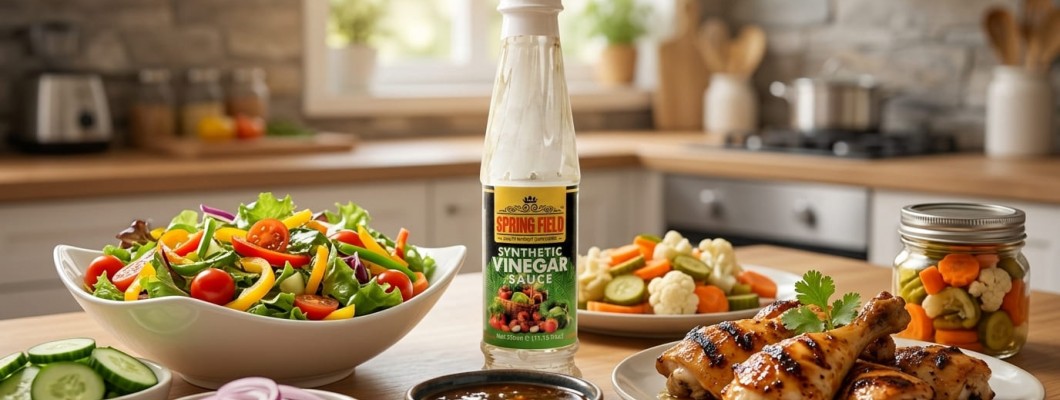
The Tangy Upgrade: Vinegar Uses, Tips & Cooking Ideas
Quick Answer: Vinegar is a versatile acidic ingredient used to add tanginess and balance to salads, sauces, marinades, pickles and many everyday dishes. Use it gradually, taste as you go, and choose the type of vinegar that suits the recipe.
Whether you are making a fresh salad, preparing a marinade, balancing a sauce or adding acidity to a homemade dish, vinegar can make a noticeable difference. It adds a sharp, tangy character and can help balance richer, salty or spicy flavours.
What Is Vinegar Used For?
Vinegar is an acidic liquid commonly used as a flavouring and acidifying ingredient in food. Its main kitchen role is to add acidity, brightness and tanginess to recipes.
In everyday cooking, vinegar can be used in salads, sauces, marinades, pickling-style preparations and savoury dishes. The amount depends on the recipe, the type of vinegar and the flavour you want.
How Do You Use Vinegar in Cooking?
Start with a small amount, mix it into the recipe, taste and adjust gradually. Vinegar is concentrated in flavour, so adding it little by little gives you better control over the final taste.
- Choose a vinegar that suits the dish.
- Add a small amount to the recipe.
- Mix thoroughly so the acidity spreads evenly.
- Taste the food after mixing.
- Add a little more only if you want extra tanginess.
What Can You Make With Vinegar?
Vinegar works particularly well in recipes where you want acidity to balance other flavours. Some common uses include:
- Salad dressings
- Cooking sauces
- Marinades
- Pickling-style recipes
- Chutneys and condiments
- Stir-fries and savoury dishes
- Sandwich and burger sauces
- Spicy and tangy dipping sauces
How Do You Use Vinegar in Salads?
Vinegar can be mixed with oil, seasonings and other dressing ingredients to create a simple tangy salad dressing.
For a quick dressing, combine vinegar with oil and seasonings, then mix well before adding it to the salad. Start with a modest amount of vinegar and adjust according to the ingredients and your preferred level of tanginess.
Which Foods Pair Well With Vinegar in Salads?
Vinegar works well with fresh vegetables, leafy salads, onions, cucumbers and other ingredients where a bright acidic flavour can balance the dish.
How Do You Use Vinegar in Sauces?
Add vinegar gradually when you want to give a sauce a sharper, brighter or more balanced flavour.
Vinegar can be useful in savoury sauces, dipping sauces and condiments. It can also complement spicy ingredients, helping create a balanced sweet, salty, spicy and tangy flavour profile.
For a simple dipping sauce, combine vinegar with your preferred sauce ingredients and adjust the quantity according to taste.
Can Vinegar Be Used in Marinades?
Yes. Vinegar can be included in marinades to add acidity and tanginess to the overall flavour.
It can be combined with ingredients such as oil, herbs, spices, sauces and seasonings. The exact mixture depends on the food being prepared and the flavour profile you want.
When making a marinade, use vinegar as one component of the mixture rather than allowing its sharp flavour to dominate the entire recipe.
Can You Use Vinegar for Pickling?
Vinegar is commonly used in pickling-style food preparations because acidity is an important part of many acidic preservation recipes.
However, safe home pickling depends on the recipe, acidity level, ingredients and processing method. Do not assume that changing vinegar quantities or substituting different acids will produce the same food-safety result.
For tested preservation recipes, follow the specific recipe and its recommended ingredients and quantities rather than improvising the acidity.
Which Type of Vinegar Should You Use?
| Vinegar Type | Best For |
|---|---|
| White or distilled vinegar | Pickling-style recipes, sauces, dressings and general cooking where a clean acidic flavour is wanted |
| Fruit or flavoured vinegar | Salads, dressings and recipes where additional flavour is desired |
| Other specialty vinegars | Recipes where the vinegar's own flavour is an important part of the dish |
The best choice depends on the recipe and the flavour you want. Always check the product label for the specific type and recommended use.
How Much Vinegar Should You Add?
There is no single amount that works for every recipe. Start with a small quantity and adjust gradually after tasting.
| Use Case | Practical Approach |
|---|---|
| Salad dressing | Start with a small amount and balance with oil and seasonings |
| Sauce | Add gradually while tasting for acidity and flavour balance |
| Marinade | Use as one part of the marinade rather than making it the dominant flavour |
| Pickling | Follow a tested recipe and do not change the specified acidity casually |
Vinegar vs Lemon Juice: Which Should You Use?
| Ingredient | Flavour Profile | Common Uses |
|---|---|---|
| Vinegar | Sharp, tangy acidity | Dressings, sauces, marinades and pickling-style recipes |
| Lemon Juice | Bright citrus acidity | Salads, marinades, drinks and dishes where citrus flavour is desired |
They both add acidity, but they do not necessarily taste the same in a recipe. Choose according to the flavour you want rather than treating them as identical ingredients.
What Is the Best Way to Use Vinegar in Everyday Cooking?
Use vinegar as a flavour-balancing ingredient rather than simply adding a large amount at once.
For example, if a homemade sauce tastes heavy or needs more brightness, add a small splash of vinegar, mix well and taste. If the flavour still needs more acidity, add another small amount.
This gradual approach gives you better control and helps prevent the finished dish from becoming unnecessarily sharp.
Who Is This Vinegar Guide For?
This guide is useful for home cooks, students, families, beginner cooks, meal-prep users and anyone who wants to understand practical ways to use vinegar in everyday food.
It is especially useful when choosing vinegar for salads, sauces, marinades, pickling-style recipes, sandwiches, burgers and other savoury meals.
What Are Common Vinegar Mistakes?
- Adding too much at once: Vinegar has a strong acidic flavour, so add it gradually.
- Ignoring flavour balance: Consider the salt, sweetness, spice and other acidic ingredients already present.
- Using the wrong vinegar for the recipe: Different vinegars can have noticeably different flavour profiles.
- Changing pickling quantities casually: Tested preservation recipes should be followed as written when food safety depends on acidity.
- Not tasting after mixing: Always evaluate the final balance after the vinegar has been incorporated.
What Is a Simple Example of Using Vinegar?
Imagine you are preparing a simple salad with vegetables and a savoury dressing. Instead of pouring in a large quantity of vinegar, start with a small amount, combine it with the other dressing ingredients and mix thoroughly.
Taste the dressing before serving. If it needs more brightness, add a little more vinegar. This simple process helps you control the acidity without overpowering the vegetables.
How Should Vinegar Be Stored?
Follow the storage instructions printed on the product label and keep the bottle properly closed when not in use. For food products, manufacturer instructions should take priority because storage recommendations can vary by product.
USDA guidance also recommends following the manufacturer's label for product-specific storage information. USDA food storage guidance provides general household food-handling advice.
Frequently Asked Questions About Vinegar
What is vinegar mainly used for?
Vinegar is mainly used to add acidity, tanginess and flavour balance to foods such as salads, sauces, marinades, condiments and pickling-style preparations.
Can I use vinegar in salad dressing?
Yes. Vinegar can be combined with oil and seasonings to make a simple tangy salad dressing.
Can vinegar be used in marinades?
Yes. Vinegar can be included in marinades to add acidity and tanginess. Use it as part of the overall marinade rather than allowing it to dominate the flavour.
Can vinegar be used for pickling?
Yes, vinegar is used in many pickling preparations. For food safety, follow a tested recipe and do not casually change the specified acidity or ingredient quantities.
Is white vinegar good for cooking?
White or distilled vinegar can be useful in cooking, sauces, dressings and pickling-style recipes where a clean acidic flavour is suitable.
Can vinegar replace lemon juice?
Vinegar and lemon juice both provide acidity, but their flavours are different. Substitution depends on the recipe and the flavour you want.
How much vinegar should I use?
The amount depends on the recipe. Start with a small quantity, mix well and adjust gradually after tasting.
Explore More Cooking Ingredients from TY Foods
For more everyday cooking ingredients, explore the TY Foods Cooking Ingredients category.
You can also explore Sauces & Condiments for chilli sauce, hot sauce, soya sauce and other pantry options.
If you enjoy tangy and spicy combinations, see our guides on how to use chilli sauce and how to use hot sauce.
Key Takeaway
Vinegar is a simple way to add acidity, tanginess and balance to everyday cooking. Use it in salads, sauces, marinades and suitable pickling-style recipes, add it gradually, taste as you go and choose a vinegar that matches the flavour of your dish.
For larger-volume kitchens, restaurants, cafés and catering operations, TY Foods also offers Springfield Vinegar 3.5L Jerry Can as a bulk-format cooking ingredient. Springfield is a brand by TY Foods Pakistan.
Source: For food-safety and storage context, see USDA Best Practices for Handling and Storing Food at Home and USDA FSIS guidance on vinegar as a food ingredient.
Leave a Comment