
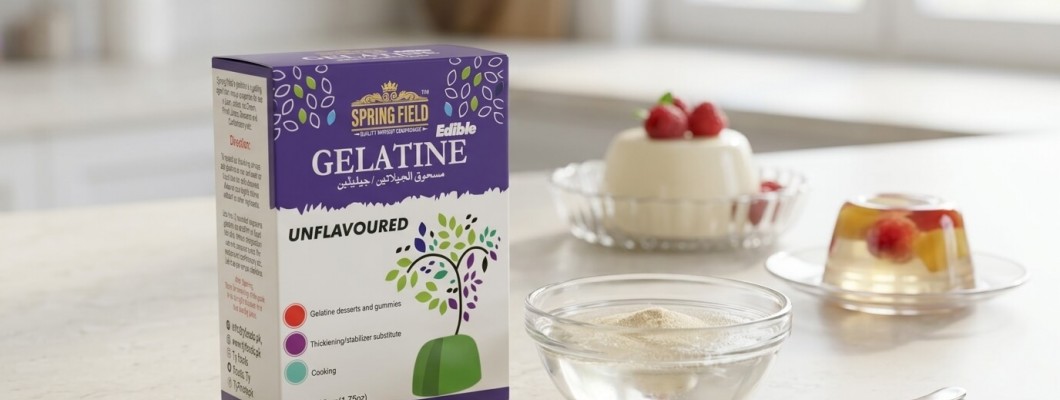
From Powder to Perfect Set: Getting Gelatin Right in Desserts
Quick Answer: Gelatin powder is used to help liquids and mixtures set into a soft or firm gel. It is commonly used in jellies, mousses, panna cotta, cheesecakes, dessert creams and other recipes that need structure. The key steps are measuring correctly, hydrating the gelatin properly and dissolving it before combining it with the rest of the recipe.
What is gelatin powder?
Gelatin powder is a protein-based gelling ingredient used to give certain foods a set texture. When hydrated and dissolved, gelatin can help a liquid or soft mixture become firm enough to hold its shape while remaining tender.
It is commonly used in dessert preparation because it can provide structure without turning a mixture completely solid. The amount used and the recipe formulation determine how firm the final result becomes.
What can you use gelatin powder for?
Gelatin powder is useful whenever a recipe needs additional structure or a controlled set.
| Use | What gelatin does | Examples |
|---|---|---|
| Jelly | Creates a set gel | Fruit jelly and dessert jelly |
| Mousse | Helps the mixture hold its shape | Chocolate or fruit mousse |
| Panna cotta | Provides a soft set | Cream-based desserts |
| Cheesecake | Helps certain no-bake mixtures set | No-bake cheesecake |
| Dessert creams | Adds structure | Selected chilled desserts |
What does blooming gelatin mean?
Blooming means hydrating dry gelatin in cool liquid before it is dissolved. This step allows the gelatin particles to absorb liquid and prepares them to dissolve evenly.
For powdered gelatin, blooming is an important preparation step when the recipe calls for it. Skipping proper hydration can contribute to uneven dissolving or small gelatin particles remaining in the finished mixture.
How do you bloom gelatin powder?
To bloom gelatin powder, sprinkle it evenly over the cool liquid specified by the recipe and allow it to absorb the liquid before dissolving it.
- Measure the gelatin powder accurately.
- Place the required cool liquid in a suitable bowl.
- Sprinkle the gelatin evenly over the surface.
- Allow the powder to absorb the liquid and swell.
- Continue with the recipe's dissolving step.
Do not simply dump a large pile of gelatin into liquid at once. Spreading it across the surface helps the powder hydrate more evenly.
How do you dissolve bloomed gelatin?
After blooming, gelatin needs to be dissolved before it is incorporated into the main mixture. Gentle heat is commonly used, depending on the recipe.
- Prepare the bloomed gelatin.
- Warm it gently according to the recipe.
- Stir until the gelatin is completely dissolved.
- Combine it with the remaining ingredients as instructed.
- Chill or set the finished mixture according to the recipe.
The goal is to dissolve the gelatin evenly rather than aggressively boiling it. Follow the specific recipe when it provides a particular heating method or temperature.
How much gelatin powder should you use?
There is no single amount of gelatin that works for every dessert. The required quantity depends on the volume of liquid, the desired firmness and the recipe formulation.
| Desired result | Typical approach |
|---|---|
| Soft set | Use the recipe's lower setting requirement |
| Firm jelly | Follow a formula designed for a stronger set |
| Mousse | Use enough gelatin to support the structure without making it rubbery |
| No-bake dessert | Follow the recipe's specified gelatin-to-liquid ratio |
Always use the quantity specified by a tested recipe or the manufacturer's instructions rather than estimating the amount by eye.
Can gelatin powder be used for jelly?
Yes. Gelatin powder is commonly used to turn a flavoured liquid into a soft or firm jelly.
The gelatin is first hydrated and dissolved, then incorporated into the jelly mixture. The finished mixture is chilled until it reaches the required set.
Fruit juice, flavoured liquids and other recipe-specific ingredients can be used as the base, depending on the recipe.
Can gelatin powder be used for mousse?
Yes. Gelatin can help a mousse maintain its structure after chilling.
Because mousse is intended to remain light and delicate, the amount of gelatin should be carefully controlled. Too much can produce a noticeably firm or rubbery texture instead of the soft consistency expected from a mousse.
Can gelatin powder be used for panna cotta?
Yes. Gelatin is commonly used to give panna cotta its characteristic soft set.
The important point is balance. Panna cotta should hold its shape when served but remain soft enough to give a delicate texture when eaten.
Can gelatin be used in cheesecake?
Yes. Gelatin can be used in some no-bake cheesecake recipes to provide additional structure.
It is normally dissolved before being incorporated into the cheesecake mixture. The finished cheesecake is then chilled so the gelatin can develop its set.
Why is my gelatin dessert not setting?
If a gelatin dessert does not set properly, the cause may be an incorrect gelatin quantity, incomplete dissolving, excessive liquid, unsuitable ingredients or insufficient chilling time.
- Check that the correct amount of gelatin was measured.
- Make sure the gelatin was properly hydrated.
- Ensure the gelatin dissolved completely.
- Check whether the recipe contains ingredients that affect setting.
- Allow enough chilling time before judging the final texture.
If the recipe provides a specific gelatin-to-liquid ratio, follow that formula closely rather than adding extra gelatin immediately.
Why does gelatin sometimes form lumps?
Lumps can form when gelatin powder is not hydrated evenly or when dry powder is added directly to a mixture without proper preparation.
Sprinkling the gelatin gradually over the cool liquid and allowing it to hydrate before dissolving can help produce a smoother mixture.
Can you add gelatin directly to hot liquid?
It is generally better to follow the recipe's hydration method rather than adding dry gelatin directly to very hot liquid. Proper hydration before dissolving gives the gelatin a more controlled preparation process.
If a recipe specifically uses another method, follow that recipe's instructions.
Which desserts work best with gelatin?
Gelatin is particularly useful in desserts where a chilled mixture needs to hold its shape.
| Dessert | Role of gelatin | Texture goal |
|---|---|---|
| Jelly | Creates the gel structure | Soft to firm set |
| Mousse | Supports the mixture | Light and stable |
| Panna cotta | Sets the cream mixture | Soft and delicate |
| No-bake cheesecake | Adds structure | Sliceable chilled filling |
| Fruit dessert | Helps hold liquid or fruit mixture | Controlled set |
What ingredients can affect gelatin setting?
Some recipe ingredients can influence how well gelatin sets. Certain fresh fruits contain enzymes that can interfere with gelatin's ability to form a gel unless the fruit has been appropriately processed.
For this reason, do not change fruit or other major ingredients in a gelatin recipe without checking whether the substitution is suitable.
How should you handle gelatin in a dessert recipe?
The most reliable approach is to treat gelatin as a measured functional ingredient rather than something to add casually.
- Read the complete recipe before starting.
- Measure gelatin accurately.
- Hydrate it using the specified liquid.
- Dissolve it properly.
- Combine it with the recipe at the appropriate stage.
- Chill the finished dessert for the required time.
- Check the final texture only after the dessert has had enough time to set.
Who uses gelatin powder?
Gelatin powder can be useful for home bakers, dessert makers, bakeries, cafés, restaurants, caterers and commercial kitchens preparing chilled desserts.
- Home bakers: for jelly, mousse, panna cotta and no-bake desserts.
- Families: for homemade chilled sweets and desserts.
- Bakeries: for selected cakes, fillings and dessert preparations.
- Cafés: for plated desserts and chilled menu items.
- Caterers: for desserts prepared in batches.
What is a simple gelatin dessert idea?
A simple starting point is a fruit jelly. Prepare the gelatin according to the package or recipe instructions, combine it with the chosen liquid and flavouring, pour it into a suitable container and chill until completely set.
For a more advanced dessert, the same basic principles can be applied to panna cotta, mousse or a no-bake cheesecake formula.
What are the most common gelatin mistakes?
- Adding too much gelatin and creating an overly firm texture.
- Using too little gelatin for the amount of liquid.
- Failing to hydrate powdered gelatin properly.
- Leaving undissolved gelatin particles in the mixture.
- Changing the recipe's liquid quantity without adjusting gelatin.
- Judging the texture before the dessert has chilled sufficiently.
- Using unsuitable fresh fruit without checking its effect on gelatin.
How should gelatin powder be stored?
Keep dry gelatin powder sealed and protected from moisture. Store it according to the instructions on the product packaging and avoid exposing the powder to unnecessary heat or humidity.
Keeping powdered ingredients dry helps maintain their quality and makes them easier to measure and use consistently.
Frequently Asked Questions About Gelatin Powder
What is gelatin powder used for?
Gelatin powder is used to give structure and a soft or firm set to foods such as jelly, mousse, panna cotta, cheesecake and other chilled desserts.
What does blooming gelatin mean?
Blooming means hydrating dry gelatin in cool liquid before dissolving it. This helps the gelatin absorb liquid and dissolve more evenly.
How do you use gelatin powder?
Measure it according to the recipe, hydrate it in the specified liquid, dissolve it properly and then combine it with the remaining ingredients.
Can gelatin powder be used for jelly?
Yes. Gelatin powder is commonly used to turn flavoured liquid into a chilled jelly with the desired level of firmness.
Can gelatin powder be used for mousse?
Yes. A measured amount of gelatin can help mousse maintain its structure while remaining soft and light.
Why is my gelatin not setting?
Possible reasons include incorrect measurements, incomplete hydration or dissolving, too much liquid, unsuitable ingredients or insufficient chilling time.
Why does my gelatin have lumps?
Lumps can develop when dry gelatin is not hydrated evenly or is not dissolved properly. Sprinkle it over the liquid gradually and follow the recipe's hydration method.
Can I use more gelatin to make a dessert firmer?
You can change the firmness by adjusting gelatin, but it is better to use a tested recipe ratio. Too much gelatin can produce an unnecessarily firm or rubbery texture.
Does gelatin need to be refrigerated?
Gelatin desserts normally need chilling to develop their set. Follow the storage instructions for the finished recipe and product.
Related TY Foods Resources
- Baking Ingredients at TY Foods
- Icing Sugar for Frosting, Cakes, Cookies & Glazes
- Cocoa Powder Uses for Cakes, Brownies & Desserts
- Instant Yeast for Naan, Bread & Pizza
Key Takeaway
Gelatin powder is a useful setting ingredient for jellies, mousses, panna cotta, no-bake cheesecakes and other chilled desserts. The most important part of using it successfully is following the correct ratio, hydrating the powder properly and dissolving it before incorporating it into the recipe.
For home bakers, bakeries, cafés and food-service kitchens, accurate measurement and controlled preparation make the difference between a delicate set and an overly firm dessert.
Springfield is a food brand by TY Foods Pakistan, offering baking and cooking ingredients for home kitchens, bakeries, cafés and food-service use.
Further reading: For additional baking and ingredient guidance, see King Arthur Baking and the USDA Agricultural Research Service.
Leave a Comment