
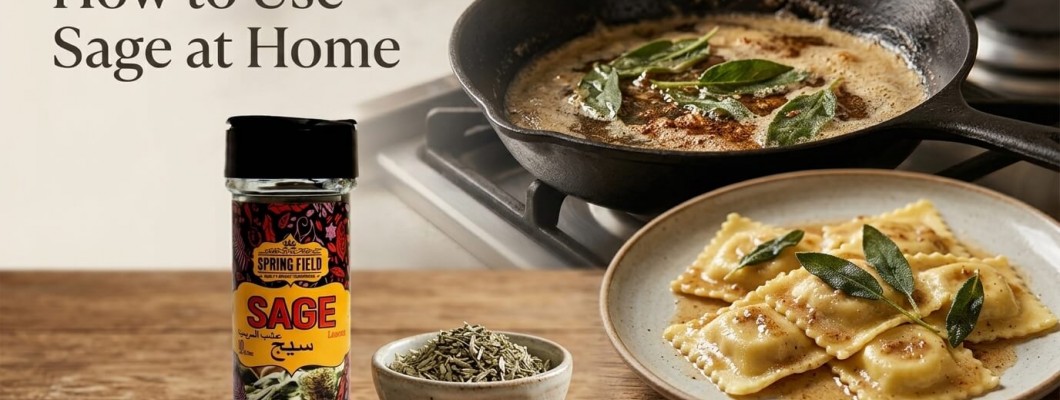
Sage Uses, Pairings & Cooking Tips
Quick Answer: Sage is an aromatic culinary herb with a savoury, earthy flavour. Dried sage can be used in small amounts with chicken, meat, soups, vegetables, butter-based sauces, stuffing and other savoury dishes. For everyday cooking, add a small amount first and adjust according to the recipe and your preferred flavour.
What Is Sage?
Sage is an aromatic culinary herb from the Salvia genus. Common culinary sage is often associated with Salvia officinalis and is valued for its distinctive herbal aroma and savoury flavour.
USDA sources classify sage among culinary herbs and describe sage as an aromatic herb used in food applications. Sage-derived flavouring ingredients are also used across a range of foods, including meats and other savoury products.
For home cooking, dried sage is especially useful when you want a concentrated herbal flavour without needing fresh leaves.
How Do You Use Sage in Cooking?
The easiest way to use dried sage is to add a small amount to savoury recipes while they cook. Sage works particularly well with rich, roasted and slow-cooked foods.
- Start with a small quantity of dried sage.
- Add it to chicken, meat, vegetables, soups or sauces.
- Combine it with other herbs when the recipe calls for a deeper savoury flavour.
- Taste the dish and adjust gradually.
Because culinary herbs have strong flavours and aromas, they are generally used in relatively small quantities.
What Foods Pair Well With Sage?
Sage pairs especially well with rich and savoury foods. It can add an earthy herbal note to roasted meats, chicken, vegetables, soups and butter-based sauces.
| Food | How to Use Sage |
|---|---|
| Chicken | Add a small amount to seasoning or marinades. |
| Meat | Use with savoury meat rubs, gravies or slow-cooked dishes. |
| Potatoes | Combine with potatoes before roasting. |
| Vegetables | Add to roasted or sautéed vegetables. |
| Soups | Use a small amount to build herbal flavour. |
| Butter sauces | Infuse butter with sage for a rich savoury sauce. |
How Do You Make Sage Brown Butter Sauce?
Sage brown butter sauce is one of the easiest ways to highlight the herb's aroma. The basic method is to gently heat butter and add sage so the herb flavours the butter.
- Melt butter in a suitable pan over moderate heat.
- Add a small amount of dried sage.
- Allow the butter to develop a deeper colour while keeping a close eye on the heat.
- Remove from heat when the desired flavour and colour are reached.
- Use the sauce with pasta, vegetables, potatoes or other savoury dishes.
Keep the heat controlled so the butter and herb do not become overly dark or bitter.
Can You Use Dried Sage Instead of Fresh Sage?
Yes. Dried sage can be used when fresh sage is not available, but the flavour concentration can differ between products. Start with a smaller amount of dried sage and adjust according to taste rather than automatically using the same quantity as fresh leaves.
| Type | Best Use |
|---|---|
| Dried sage | Soups, sauces, meat, chicken, vegetables and seasoning mixes |
| Fresh sage | Fresh herb preparations, garnishes and recipes where the leaf texture matters |
How Much Sage Should You Use?
There is no single amount that works for every recipe because sage strength varies by product and dish. A practical approach is to start with a small quantity, especially when using dried sage, then adjust after tasting.
| Recipe Type | Starting Approach |
|---|---|
| Soup | Start with a small pinch and adjust. |
| Chicken seasoning | Use a small amount with other seasonings. |
| Roasted vegetables | Sprinkle lightly before roasting. |
| Butter sauce | Use enough to gently flavour the butter without overpowering it. |
| Meat dishes | Combine with other savoury herbs and seasonings. |
What Does Sage Taste Like?
Sage has a distinctive savoury, earthy and strongly aromatic character. It can give rich dishes a deeper herbal note, which is why it is commonly paired with meat, poultry, vegetables and sauces.
If you are trying sage for the first time, start with a small amount. Its flavour can become noticeable quickly, particularly in smaller dishes.
Can You Use Sage With Chicken?
Yes. Sage is a useful herb for chicken seasoning. It can be combined with other savoury seasonings before roasting, grilling or cooking chicken.
For a simple home-cooking approach, season chicken with your usual salt and spices, add a small amount of dried sage, and cook according to your recipe.
Can You Use Sage With Potatoes and Vegetables?
Yes. Sage works well with roasted potatoes and other savoury vegetables. Add a light amount of dried sage before roasting so its aroma can blend with the vegetables during cooking.
For roasted potatoes, combine potatoes with oil, salt and your preferred seasonings, then add a small amount of dried sage before roasting.
Can Sage Be Used in Soups and Sauces?
Yes. Sage can add an earthy herbal layer to soups, gravies and savoury sauces. Because sage has a strong aroma, it is better to start lightly and increase the amount if needed.
It can also be combined with other culinary herbs to create a more balanced seasoning profile.
What Herbs Pair Well With Sage?
Sage can be combined with other herbs when you want a more complex savoury flavour. The best combination depends on the dish.
- Sage + rosemary: suitable for roasted meats and vegetables.
- Sage + thyme: useful for chicken, soups and savoury dishes.
- Sage + parsley: can add a fresher herbal contrast.
- Sage + oregano: useful when building a stronger savoury seasoning blend.
For more culinary herb ideas, explore the TY Foods Herbs collection.
Who Should Use Dried Sage?
Dried sage is useful for home cooks who want a convenient herb for everyday savoury recipes. It can also be useful for people preparing chicken, meat, soups, roasted vegetables, sauces and other dishes where an aromatic herb can complement the main ingredients.
If you regularly use dried herbs, you can also explore Springfield Oregano and Springfield Dried Thyme for additional herb pairings.
What Is a Simple Sage Recipe for Beginners?
A simple roasted potato recipe is an easy starting point because the herb can be added gradually and tasted with the finished dish.
- Cut potatoes into evenly sized pieces.
- Add a small amount of cooking oil and salt.
- Add a light sprinkle of dried sage.
- Mix everything evenly.
- Roast until the potatoes are cooked and lightly browned.
- Taste and adjust seasoning if needed.
This same basic approach can be adapted for other roasted vegetables or chicken.
What Are Common Mistakes When Using Sage?
- Using too much: Sage has a pronounced flavour, so start small.
- Ignoring the dish: Match the amount of sage to the quantity and richness of the food.
- Adding too many strong herbs: Several strong herbs together can overpower the main ingredient.
- Overheating delicate preparations: Use controlled heat when preparing sage with butter or other fats.
- Not tasting: Adjust the seasoning gradually instead of adding a large amount at once.
How Should Dried Sage Be Stored?
Keep dried sage in its original packaging or another suitable closed container and follow the storage instructions provided on the product label. Keeping dried herbs protected from unsuitable storage conditions helps preserve their aroma and quality.
Frequently Asked Questions About Sage
What is sage used for?
Sage is used as a culinary herb in dishes such as chicken, meat, soups, vegetables, sauces and other savoury recipes.
Can I use dried sage for chicken?
Yes. Dried sage can be added in small amounts to chicken seasoning, marinades or other chicken recipes.
Does sage go well with potatoes?
Yes. Sage pairs well with roasted potatoes and can be added with oil, salt and other seasonings before cooking.
Can sage be used in soup?
Yes. A small amount of sage can add an earthy herbal flavour to savoury soups.
Is dried sage strong?
Dried sage can have a pronounced herbal aroma, so it is best to start with a small amount and adjust according to taste.
Can sage be mixed with thyme?
Yes. Sage and thyme can be combined in savoury recipes such as chicken, soups, roasted vegetables and meat dishes.
What is the easiest way to start using sage?
Start with a small amount in roasted potatoes, chicken, soup or a butter-based sauce. These dishes make it easy to control the flavour while you become familiar with the herb.
Related TY Foods Cooking Resources
- Shop Herbs & Culinary Seasonings
- Thyme Uses, Pairings & Cooking Tips
- Oregano Uses, Pairings & Cooking Tips
- Paprika Powder Uses & Cooking Ideas
- Explore Cooking Ingredients
Key Takeaway
Sage is a strongly aromatic culinary herb that works especially well with chicken, meat, potatoes, vegetables, soups and savoury sauces. For dried sage, start with a small amount, combine it thoughtfully with other herbs, and adjust the seasoning after tasting.
Springfield is a brand by TY Foods Pakistan. Explore Springfield herbs and culinary seasonings for more everyday cooking options.
Source: For background on sage as a culinary herb and its food applications, see the USDA Agricultural Marketing Service technical report on flavors and the USDA ARS resource on perennial culinary herbs.
Leave a Comment