
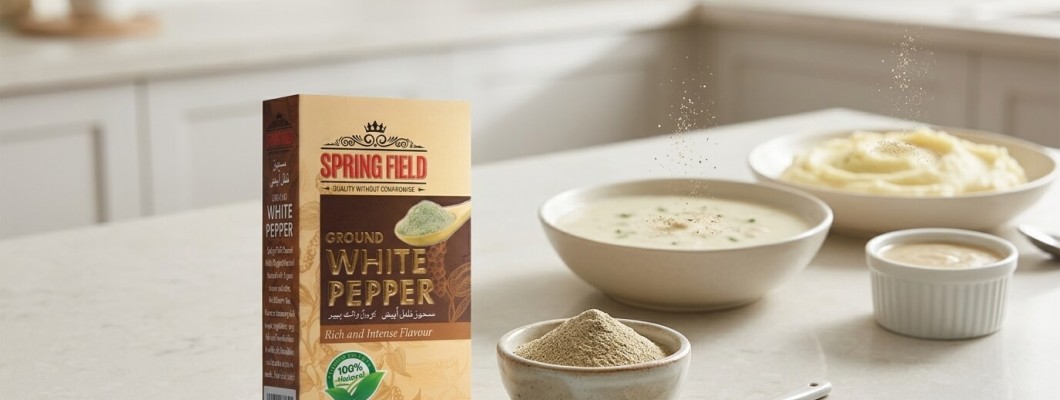
White Pepper Uses, Pairings & Cooking Tips
Quick Answer: White pepper is a pungent culinary spice used to add peppery flavour to soups, sauces, chicken, meat, vegetables, noodles and other savoury dishes. It is especially useful when you want pepper flavour without the visible dark flecks associated with black pepper.
What Is White Pepper?
White pepper is a spice made from the dried fruit of the pepper plant, Piper nigrum. It comes from the same plant as black pepper, but the processing of the peppercorns differs.
White pepper has a distinctive peppery, earthy and aromatic character. It is commonly used in savoury cooking and can be especially useful in dishes where a smooth appearance is preferred.
For home cooking, ground white pepper is a convenient seasoning because it can be mixed directly into soups, sauces, marinades and other recipes.
How Do You Use White Pepper in Cooking?
The simplest way to use white pepper is to add a small amount to savoury food during seasoning or cooking. Start lightly because white pepper has a noticeable peppery flavour.
- Add it to soups and broths.
- Use it in creamy or light-coloured sauces.
- Season chicken and meat dishes.
- Add it to noodles and fried rice.
- Use it with roasted or cooked vegetables.
- Combine it with other herbs and spices in seasoning blends.
White pepper can be added during cooking or seasoning depending on the recipe. Taste the dish and adjust gradually.
Why Use White Pepper Instead of Black Pepper?
The main reason to choose white pepper is its different appearance and flavour profile. White pepper can provide peppery seasoning without the prominent black specks produced by ground black pepper.
| Feature | White Pepper | Black Pepper |
|---|---|---|
| Appearance | Light-coloured | Dark-coloured |
| Flavour | Pungent, earthy and peppery | Peppery and aromatic with a more noticeable outer-pepper character |
| Best suited to | Soups, light sauces, noodles and selected savoury dishes | General seasoning, grilled foods, sauces and everyday cooking |
| Visual effect | Less visible in light-coloured dishes | Visible dark flecks |
Neither is universally better. The better choice depends on the dish, desired flavour and appearance.
When Should You Use White Pepper?
White pepper is particularly useful when you want peppery seasoning in a dish where dark pepper specks may not suit the appearance.
- Light-coloured soups: Adds pepper flavour without prominent black flecks.
- Creamy sauces: Useful when maintaining a lighter visual appearance matters.
- Noodles: Works well in many Asian-style noodle preparations.
- Chicken: Can be included in savoury chicken seasoning.
- Vegetables: Adds peppery flavour to cooked or roasted vegetables.
Can You Use White Pepper in Soup?
Yes. White pepper is commonly suited to soups and broths because it adds peppery flavour without creating the dark appearance of ground black pepper.
Start with a small amount while seasoning the soup, stir well and taste before adding more.
Can You Use White Pepper in Sauces?
Yes. White pepper can be used in savoury sauces, particularly light-coloured or creamy sauces where visible black pepper specks may not be desired.
Add a small amount during seasoning and adjust according to the sauce and other ingredients.
Can You Use White Pepper With Chicken?
Yes. White pepper can be included in chicken seasoning, marinades and savoury chicken recipes. It can be combined with other herbs and spices to create a balanced seasoning mix.
For a simple preparation, season chicken with your usual ingredients and add a small amount of white pepper before cooking.
Can White Pepper Be Used in Noodles and Fried Rice?
Yes. White pepper can be used in noodles and fried rice, particularly in Asian-style cooking where peppery seasoning complements sauces, vegetables and other savoury ingredients.
- Prepare the noodles or rice according to your recipe.
- Add your preferred sauce and seasonings.
- Add a small amount of white pepper.
- Mix thoroughly so the seasoning is distributed evenly.
- Taste and adjust if necessary.
White pepper can be especially useful when you want pepper flavour without adding visible black flecks to the finished dish.
Does White Pepper Taste Different From Black Pepper?
Yes. Although both come from the same pepper plant, white and black pepper have different processing methods and can provide different flavour characteristics.
White pepper is often described as pungent and earthy, while black pepper is widely recognised for its peppery aroma and more prominent outer-pepper character.
The difference is noticeable enough that the two spices can change the character of a recipe even when used for the same basic purpose.
How Much White Pepper Should You Use?
There is no single amount that works for every recipe. The right quantity depends on the amount of food, the other seasonings and how strong you want the pepper flavour to be.
| Dish | Starting Approach |
|---|---|
| Soup | Start with a small amount and adjust after tasting. |
| Sauce | Add lightly during seasoning. |
| Chicken | Use as part of the overall seasoning mix. |
| Noodles | Add a small amount with the other sauces and seasonings. |
| Fried rice | Season lightly and adjust before serving. |
| Vegetables | Combine with oil, salt and other seasonings as appropriate. |
What Foods Pair Well With White Pepper?
White pepper can complement a broad range of savoury foods. Its strongest use cases are dishes where peppery flavour is wanted without a strong visual contrast.
- Chicken and poultry
- Soups and broths
- Light and creamy sauces
- Noodles
- Fried rice
- Cooked vegetables
- Meat dishes
- Seasoning blends
For additional seasoning options, explore the TY Foods Cooking Ingredients collection.
Who Should Use White Pepper?
White pepper is useful for home cooks who want a versatile pepper seasoning for soups, sauces, chicken, noodles, rice, vegetables and other savoury recipes.
It can also be a useful choice for cooks who prefer pepper flavour without visible dark pepper particles in lighter-coloured dishes.
For more culinary seasoning ideas, explore the TY Foods Herbs & Culinary Seasonings collection.
What Is an Easy White Pepper Recipe for Beginners?
A simple soup or noodle dish is an easy way to start using white pepper because you can add a small amount, taste the food and adjust the seasoning.
- Prepare your preferred soup, broth or noodle dish.
- Add the main seasonings required by the recipe.
- Add a small amount of white pepper.
- Stir thoroughly.
- Taste the dish.
- Add a little more only if additional pepper flavour is needed.
This gradual approach makes it easier to control the final flavour.
Can White Pepper Be Used With Other Spices?
Yes. White pepper can be combined with other herbs and spices depending on the recipe. It can work as one component of a broader seasoning blend rather than being the only spice used.
For example, chicken can be seasoned with white pepper alongside other savoury ingredients, while soups and sauces can use white pepper together with herbs and other seasonings.
What Are Common Mistakes When Using White Pepper?
- Using too much: White pepper has a noticeable peppery flavour, so start lightly.
- Treating every recipe the same: A soup may need a different amount from a large meat preparation.
- Adding too much at once: Gradual seasoning gives you better control.
- Ignoring the other seasonings: Consider the complete flavour profile of the dish.
- Not tasting: Always adjust seasoning after the pepper has blended into the food.
How Should White Pepper Be Stored?
Keep white pepper properly closed and follow the storage instructions provided on the product packaging. Protecting spices from unsuitable storage conditions helps maintain their aroma and quality.
For product-specific storage guidance, always follow the manufacturer's instructions.
Frequently Asked Questions About White Pepper
What is white pepper used for?
White pepper is used to season soups, sauces, chicken, meat, noodles, fried rice, vegetables and other savoury dishes.
Is white pepper the same as black pepper?
White pepper and black pepper come from the same pepper plant but are processed differently, giving them different appearance and flavour characteristics.
Why use white pepper instead of black pepper?
White pepper is useful when you want peppery flavour without prominent dark pepper flecks, especially in lighter-coloured soups and sauces.
Can I use white pepper in soup?
Yes. White pepper can add peppery flavour to soups and broths. Start with a small amount and adjust after tasting.
Can I use white pepper for chicken?
Yes. White pepper can be used as part of chicken seasoning, marinades and savoury chicken recipes.
Can I use white pepper in noodles?
Yes. White pepper can complement noodles and Asian-style savoury dishes alongside sauces, vegetables and other seasonings.
Does white pepper taste stronger than black pepper?
White and black pepper have different flavour characteristics. White pepper can have a pronounced pungent and earthy character, so it is best to start with a small amount.
How much white pepper should I use?
Start with a small amount and adjust according to the recipe, quantity of food and preferred pepper flavour. There is no universal quantity for every dish.
What dishes are best with white pepper?
White pepper works particularly well in soups, sauces, chicken, noodles, fried rice, vegetables and other savoury recipes.
Related TY Foods Cooking Resources
- Shop Cooking Ingredients
- Shop Herbs & Culinary Seasonings
- Paprika Powder Uses & Cooking Ideas
- Oregano Uses, Pairings & Cooking Tips
- Thyme Uses, Pairings & Cooking Tips
- Rosemary Uses, Pairings & Cooking Tips
White pepper works well in rice dishes like biryani and pulao, which are often topped with fried onion (birista).
Key Takeaway
White pepper is a versatile culinary spice that can add peppery, earthy flavour to soups, sauces, chicken, noodles, fried rice, vegetables and other savoury dishes. Choose it over black pepper when its flavour profile or lighter appearance suits the recipe, and start with a small amount before adjusting.
Springfield is a brand by TY Foods Pakistan. Explore Springfield herbs and culinary seasonings for more everyday cooking options.
Source: For background on pepper as a culinary spice, see the USDA Agricultural Marketing Service resource on black pepper and the USDA Agricultural Research Service information on culinary herbs and spices.
Leave a Comment